As manufacturing growth shifts toward productivity, technology and complexity, many leadership teams are finding that structure, not ambition is now the limiting factor.
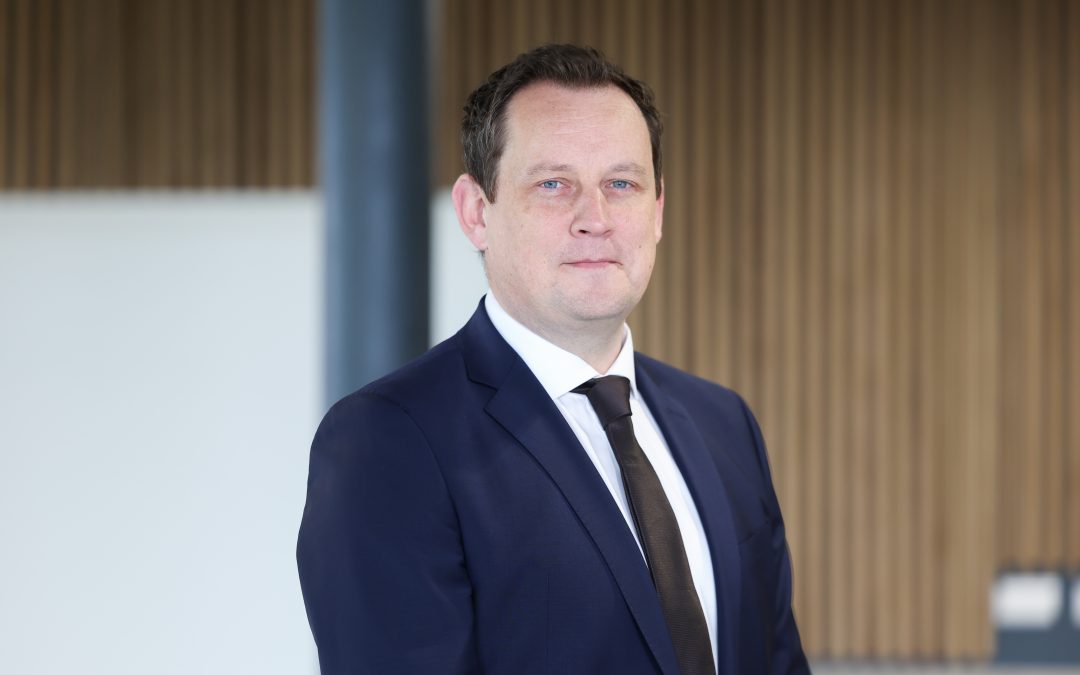
By Darren McVicker, Vickerstock
Manufacturing in Northern Ireland has rarely lacked ambition.
Across the sector, businesses are expanding into new markets, moving into higher-value work, and investing in automation, digital capability and advanced engineering. From globally recognised names like Wrightbus and Thompson Aero Seating, through to scaling firms building export-led growth, the opportunity is clear.
What’s becoming more prominent in conversations with leadership teams is a different kind of constraint, one that tends to emerge as businesses scale.
In many of the manufacturing businesses we work alongside across the UK and Ireland, the challenge is no longer access to capital, demand, or even technology. It is whether the current leadership structure can fully deliver the next phase of growth.
Growth Is Now Happening Through Operations
Traditionally, growth in manufacturing followed a familiar model: increase output, add headcount, and scale volume. That model has shifted.
Today, growth is being driven by a different set of levers, product innovation, operational efficiency, digital capability, and the ability to deliver more from the same footprint. Recent industry insight reflects this change, with only a small proportion of manufacturers planning to grow through headcount, and the majority focused instead on productivity, technology adoption and product mix
In simple terms, growth is no longer happening alongside operations it is happening through operations. And that has significant implications for leadership.
The Changing Role of the Operations Director
Nowhere is this shift more visible than in the role of the Operations Director.
Five years ago, the expectation was clear: maintain control, drive efficiency, ensure delivery, and protect stability. During the COVID period, this skillset proved critical. The strongest operations leaders were those who could keep businesses running under intense pressure and uncertainty. Today, the brief has expanded.
Operations leaders are increasingly expected to contribute directly to growth, supporting new product introduction, enabling entry into new markets, improving lead times, and overseeing the integration of digital and automation technologies.
At the same time, they remain accountable for the fundamentals: safety, quality, output, and cost.
This creates a tension that many leadership teams will recognise. Broader industry data suggests a significant majority of operations leaders are now balancing day-to-day delivery with long-term transformation, often within structures that were not originally designed for both.
The “Invisible” Leadership Gap
At certain points in that growth journey, this can create what many describe as an “invisible” leadership gap. Not a capability issue, and not always immediately obvious, but a gap between what the business now requires and what the leadership structure was originally built to deliver.
In conversations across the sector, this tends to show up in three ways.
First, a scale gap. Businesses moving from £20–30 million toward £50 million and beyond often retain leadership structures built for a simpler, more contained operation.
Second, a capability gap. Northern Ireland has a deep pool of highly capable, technically strong manufacturing leaders. However, not all have had exposure to international scale, multi-site complexity, or transformation-led growth environments.
Third, and most commonly, a capacity gap. Decision-making becomes concentrated in a small number of individuals, typically the Managing Director and Operations Director who are pulled back into the day-to-day at the very point they need to be focused on strategy and growth.
In a conversation recently, an Operations Director recently put it simply: “I’m spending more time firefighting than I am actually moving the business forward.” It wasn’t a question of ability, it was a question of bandwidth.
Why Structure Matters More Than Individuals
A natural starting point for many businesses is to look at individuals, do we have the right people in place?
In many cases, the more useful question is structural.
If senior leaders are spending the majority of their time expediting orders, resolving operational issues, or acting as the escalation point for day-to-day decisions, it is often a signal that the layer beneath them needs to evolve alongside the business.
Even highly capable leaders can find it difficult to operate strategically if the structure around them hasn’t kept pace with growth.
This is particularly relevant in Northern Ireland, where many manufacturing businesses have grown organically over time. Leadership teams are often built on trust, experience, and deep operational knowledge, all strong foundations, and a key part of what has made the sector successful. As businesses scale, however, those structures sometimes need to adapt to new levels of complexity.
And to be fair, these are not straightforward decisions. Evolving a leadership model particularly in established businesses requires careful judgement, not just change for its own sake.
The Risk of “Comfort Hiring”
Another theme that often comes up in discussion is how businesses approach hiring at this stage of growth. When complexity increases, it’s natural to look for leaders from similar organisations, with comparable experience. On paper, these decisions are logical and often low-risk.
However, they do not always create the shift the business is looking for.
As one Managing Director reflected: “We hired for comfort, not for where we’re trying to get to.”
What was missing was not competence, but perspective, someone who had already operated at the next level of scale and could bring a different lens to the role. As businesses evolve, the question gradually shifts from “who can do this job today?” to “who has experience of what we’re trying to do next?” I appreciate that’s easy to say, a much harder decision to commit to in practice.
What High-Performing Businesses Are Doing Differently
The businesses navigating this transition most effectively tend to share a number of common approaches. They build leadership depth earlier than feels necessary, particularly beneath senior operational roles. This creates the capacity for Operations Directors and Managing Directors to step back from day-to-day activity and focus on growth.
They redefine roles around outcomes, rather than activity, shifting the emphasis from oversight to ownership of capability, capacity, and performance. They align operations more closely with commercial strategy, recognising that delivery, responsiveness, and product mix are now key competitive levers.
And importantly, they tend to make these adjustments proactively, before growth slows or pressure becomes more visible. These aren’t overnight changes, and they don’t happen without some level of disruption along the way.
A Sector-Level Conversation
None of this is unique to a single business. It’s a conversation that, in different ways, is already happening in boardrooms across the region.
Across Northern Ireland’s manufacturing sector, there is a shared challenge: how to evolve leadership models in line with changing growth dynamics.
The sector’s strength has always been its engineering excellence, resilience, and ability to compete globally. The next phase of growth will increasingly depend on leadership capability and specifically, the ability to build organisations that can scale, adapt, and operate effectively in a more complex environment.
Looking Ahead
For many leadership teams, the most valuable question is not simply whether they have the right people in place.
It is whether they have the right structure for the business they are trying to become. In many cases, those are not straightforward decisions, particularly in businesses where leadership teams have been built over time and carry a lot of trust and history.
In most cases, the ambition is there. The opportunity is there.
For many leadership teams, that’s not a question that needs a perfect answer, but it is one worth exploring early, before the pressure to change becomes unavoidable.
Recent Comments